Golden-Hour Outdoor Sushi Catering in Southern California with Hibachi
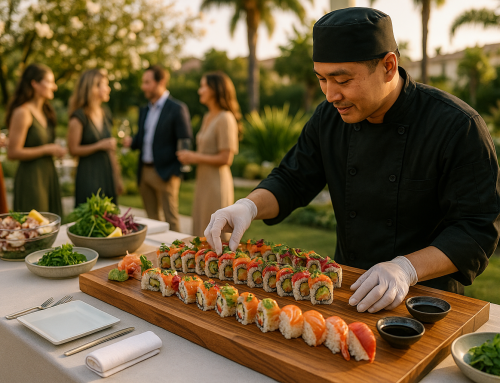
Outdoor sushi catering in Southern California requires more than selecting a menu and choosing a sunset start time. For a late-summer backyard party, rooftop reception or waterfront celebration, the service plan should account for afternoon heat, changing light, evening breezes and the movement of guests between dining and social areas. Careful coordination allows sushi and hibachi stations to remain functional while the setting transitions naturally from daylight to golden hour.

Planning Outdoor Sushi Catering in Southern California Around Sunset
Start with the actual sunset time for the event date and location. Golden hour varies throughout late summer, and nearby buildings, hills or coastal cloud cover may reduce usable daylight earlier than expected. A rooftop in Los Angeles may stay bright longer than a garden enclosed by trees in Orange County, while a waterfront venue in San Diego may experience glare and stronger wind before sunset.
Build the schedule backward from the preferred dining moment. Guest arrival can take place while the sun is still high, with shaded beverages and light appetizers available first. Sushi service can then begin as the temperature moderates, followed by hibachi cooking as guests settle into the main dining period. This sequence prevents the most active food service from competing with arrival congestion.
Hosts should also monitor the local forecast and heat alerts during the week of the event. The National Weather Service recommends limiting strenuous activity during dangerous heat, providing water and using shaded rest areas. These measures are relevant not only to guests but also to chefs and event staff working near cooking equipment. (weather.gov)
Choose Station Locations Before Finalizing the Layout
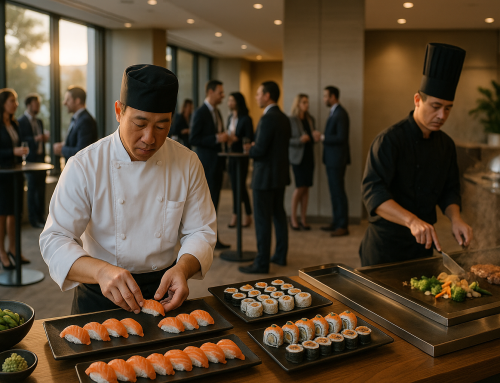
A site walkthrough, whether in person or by video, helps identify suitable areas for each station. The sushi station should be on a level surface in full shade, away from direct afternoon sun and separated from grills, fire features and other heat sources. It also needs enough space for refrigeration or insulated cold storage, covered ingredients, handwashing arrangements and orderly plate pickup.
The hibachi station requires a stable cooking area with ventilation and appropriate clearance from guests, landscaping, walls and overhead structures. Position it so that the prevailing breeze carries heat and smoke away from dining tables, doors and neighboring properties. Rooftop and waterfront venues may impose additional restrictions on flames, fuel, electrical equipment or wind protection, so property and local fire-safety rules should be confirmed early.
Keep the two culinary stations visually connected but operationally separate. Guests should be able to understand where to order or collect food without crossing behind chefs or entering preparation areas. Decorative screens, planters or service tables can define boundaries without making the event feel closed off.
Protect Food Quality During Afternoon Heat
Outdoor summer party catering depends on controlled storage and short display times. The FDA Food Code uses 41°F or below for cold holding and 135°F or above for hot holding of foods requiring time and temperature control. California’s Retail Food Code also addresses temperature management, handwashing, transportation and off-site catering procedures. (fda.gov)
For sushi, this means keeping seafood and other temperature-sensitive ingredients under active temperature control until they are needed. Rather than placing a large quantity of finished sushi outdoors at once, chefs can prepare and replenish smaller platters throughout service. This supports freshness, improves presentation and reduces exposure to warm air.
USDA guidance for consumers states that perishable food should not remain without temperature control for more than two hours, or more than one hour when outdoor temperatures exceed 90°F. A professional caterer should rely on approved cold- and hot-holding procedures rather than treating those limits as a service target. (fsis.usda.gov)
For backyard hibachi catering, ingredients should remain chilled until cooking begins. Raw proteins, cooked foods, utensils and serving plates need clearly separated handling paths. Small, frequent batches can also reduce waiting time and help ensure that food reaches guests at the intended temperature.
Use Lighting for Both Atmosphere and Precision
Golden-hour light is flattering for an event, but it changes quickly. A station that appears adequately lit at 6:30 p.m. may be too dark for detailed preparation shortly afterward. Plan task lighting independently from decorative lighting so chefs can continue working safely after sunset.
Warm string lights, lanterns and candles can define dining and lounge areas. Chef stations, however, benefit from bright, neutral lighting directed toward preparation surfaces without shining into guests’ eyes. Battery-powered or venue-approved weather-rated fixtures can provide backup illumination if existing outdoor circuits are limited.
Cable routes should be settled before guests arrive. Keep cords away from queues and dining paths, use appropriate cable covers, and confirm that electrical connections are suitable for outdoor use. Lighting stands and lightweight décor should also be secured against evening wind, particularly on rooftops and near the coast.
Design Guest Flow Around Live Service
Live sushi and hibachi stations naturally attract attention. The layout should provide room for guests to watch without blocking those who are collecting food. A clear entry point, ordering position and pickup area can prevent one crowded line from forming around the entire station.
Place bars and self-service beverage tables away from chef stations. Separating these popular destinations distributes guests more evenly and keeps drinks from entering active cooking or preparation zones. Dining tables should be close enough for food to be enjoyed promptly but far enough away to avoid heat, smoke and service noise.
For larger receptions, consider multiple sushi pickup points or a combination of passed appetizers and station service. Clearly displayed menu cards can identify raw, cooked, vegetarian and gluten-conscious selections. Guests with food allergies should still speak directly with the catering team because shared preparation environments and sauces may involve cross-contact risks.
Coordinate the Transition from Sushi to Hibachi
Sushi works well during the arrival and mingling period because it can be served in individual pieces without requiring every guest to sit down at once. A balanced opening menu might include nigiri, cut rolls, hand rolls and cooked or vegetable selections.
Hibachi service can begin once the majority of guests have arrived. If seating is informal, chefs can cook in rounds and send completed portions to a dedicated pickup table. For a seated reception, the event planner and catering captain should coordinate table releases so the cooking station is not overwhelmed by simultaneous orders.
The transition does not need to be abrupt. Sushi can remain available in controlled, freshly replenished quantities while the first hibachi batches are prepared. Later in the evening, the menu can narrow to a smaller selection that is easier to maintain as lighting changes and guest demand becomes less predictable.
Prepare for Venue and Weather Variables
Every outdoor location has practical constraints. Backyard access may involve narrow gates or steps. Rooftops can have elevator schedules, loading restrictions and strict equipment rules. Waterfront sites may lack nearby power, potable water or protected storage.
California catering operations are expected to address food transportation, contamination prevention, temperature control, cleaning, waste disposal and handwashing in their operating procedures. Local requirements may also differ depending on whether an event is private or open to the public. Hosts should therefore provide accurate site details and allow the caterer to confirm operational needs with the venue and relevant local agencies. (cdph.ca.gov)
A backup plan should identify shade options, wind protection, lighting alternatives and an indoor or covered location if conditions become unsuitable. With these details decided in advance, the event can move from afternoon warmth to sunset dining without unnecessary changes to the guest experience.
Mr. Fresh Catering is Southern California’s top-rated sushi catering service. We offer an unforgettable experience with our experienced private sushi chefs and high-quality food. For more information about booking your next event catering with us, please call us at (323)-250-2460 or submit a contact us form, and we will get back to you soon.
To see more from Mr. Fresh Catering, check out our Facebook, Instagram, and YouTube channels! If you’d like to see reviews from other satisfied customers, check out Mr. Fresh Catering’s Yelp and Google pages today.
References
SHARE WITH